sâmbătă, 16 iulie 2011

vineri, 8 iulie 2011

miercuri, 6 iulie 2011
Patrick Leigh Fermor
 Better a Hero Than a Celebrity
Remembrance
Better a Hero Than a Celebrity
by Taki
July 04, 2011
Sir Patrick Leigh Fermor
I first met Sir Patrick Leigh Fermor in the summer of 1977 in Corfu. I was onboard Gianni Agnelli’s boat, and the charismatic Fiat chairman asked me to go ashore and bring “a very smart Englishman whose ancient Greek is much better than yours.” I knew “Paddy,” as everyone called him, by sight, because among us Greeks he was on a par with our ancient heroes. Leigh Fermor was not only famous for his books on Greece—Mani and Roumeli—he was renowned for his incredible heroics in a guerrilla operation in Crete in May 1944. Having spent two years disguised as a Cretan shepherd in the island’s rough mountains harassing German troops, Paddy dressed as a German police officer and stopped a car carrying General Karl Kreipe, the island commander. Having killed the general’s chauffeur, Leigh Fermor proceeded to wear the general’s hat and managed to bluff his way through Heraklion and 22 subsequent checkpoints. Kreipe was stuffed under the backseat while Leigh Fermor’s bat man and three hefty Greek rebels sat on him. For three weeks the group managed to evade frantic German search parties, finally marching the general over Mount Ida, the mythical post-birth hiding ground of Zeus.
“Heroics aside, Leigh Fermor was often compared to Lord Byron for being both a man of action and learning.”
One moonlit night high up, Fermor was guarding the general when Kreipe, gazing up at the snowy peak, recited the first line of Horace’s ode, Vides ut alta stet nive candidum…—“ You see how [Mount] Soracte stands out white with deep snow.…” Leigh Fermor then continued the poem in perfect Latin until the end. The two men stared at each other, realizing, as Paddy later wrote, that they had “drunk at the same fountain.” The German and the Englishman then made a pact. Kreipe gave his word as an officer that he would not try and escape; in return, Leigh Fermor never turned Kreipe over to the firing squad.
What follows came straight from Paddy to me in Corfu. Six months after Kreipe’s kidnapping, Leigh Fermor landed yet again on the island to celebrate its liberation. He was taken behind Heraklion’s main square, where the general who succeeded Kreipe was about to be shot. Paddy was aghast because the German was cool as ice and when Paddy introduced himself, the condemned said: “Ah, Leigh Fermor, you were lucky. Kreipe was an intellectual, a softie; I would have killed you on the spot.” When Paddy asked him if there was anything he could do for him, the German asked for one last cigarette, thanked him, smoked it while inhaling rather deeply, then said goodbye and went off and got shot ramrod-straight.
Heroics aside, Leigh Fermor was often compared to Lord Byron for being both a man of action and learning. His very good friend, Robert Byron (no relation), was a travel writer who greatly influenced Paddy, whose most celebrated book, A Time of Gifts, told the story of his walk across Europe from Rotterdam to Constantinople at age 18. Leigh Fermor continued writing travel books, and they stood out for rendering the past visible, for their evocation of youthful exuberance, and for the joy one felt reading them. He was a very good-looking man, an Anglo-Irishman whose adventures in Crete were made into a film back in 1957, Ill Met by Moonlight. The irony was that he was played by Dirk Bogarde, an outrageous homosexual whose greatest talent was spreading terrible rumors about others.
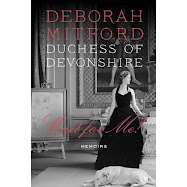
Leigh Fermor was 96 when he died but lived vigorously until the end. Three years ago his correspondence with the last surviving Mitford Girl, Deborah, dowager Duchess of Devonshire, was published to great acclaim. What a cast of characters in that book. Norman Douglas—another great influence—Steven Runciman, Osbert Lancaster, Cyril Connolly, Bruce Chatwin, and many others rich and famous and literate. Paddy was a hell of a ladies’ man, although he married only once—to Joan Rayner, who was his close and understanding companion until her death in 2003. The word ‘understanding’ is key. He also wrote the script for John Huston’s The Roots of Heaven, a vastly underrated film in which Errol Flynn made a comeback by playing a has-been of sorts, a character Flynn repeated successfully to the end.
One of Leigh Fermor’s great regrets was that while cleaning his weapon in the mountains of Crete it accidentally went off and killed his trusted guide. He told George Seferis, Greece’s first Nobel Prize winner for Literature, that this death was probably his life’s lowest point.
Leigh and his wife designed and built a beautiful but very simple house in Kardamyli, deep in the Peloponnese and overlooking the sea, and they lived there for most of his adult life. I was lucky to have met him, and now that I am of a certain age I realize how much better it must have been to have lived during heroic times—no matter whose side one was on—than today’s empty, horrible celebrity culture. Paddy, Rest in Peace.
luni, 4 iulie 2011
duminică, 3 iulie 2011
sâmbătă, 18 iunie 2011


miercuri, 1 iunie 2011

vineri, 13 mai 2011
miercuri, 11 mai 2011
La Baia turceasca, SQUAT


 Nu stiu de cite ori se va mai juca spectacolul studentilor la actorie, asa ca imbracati-va gros si mergeti peste citeva zile la urmatorul.
luni, 9 mai 2011


joi, 28 aprilie 2011

sâmbătă, 23 aprilie 2011

marți, 19 aprilie 2011
Help
 Et puis comment ne pas supposer que nos domestiques, vivant dans une situation inférieure à la nôtre, ajoutant à notre fortune et à nos défauts des richesses et des vices imaginaires pour lesquels ils nous envient et nous méprisent, se trouveront fatalement amenés à agir autrement que des gens de notre monde.
Marcel Proust
vineri, 15 aprilie 2011

joi, 14 aprilie 2011
joi, 31 martie 2011

sâmbătă, 26 martie 2011


miercuri, 2 martie 2011
De vazut neaparat
 Filmul romanesc "Buna! Ce faci?", la Iasi, de vineri, 4 martie, la cinema Victoria. Cred ca va face sali pline in cinematograful inghetat.
vineri, 25 februarie 2011

duminică, 20 februarie 2011
Elena Vacarescu si Marcel Proust
 In timpul expozitiei am vizitat diferitele pavilioane impreuna cu ea (Anna de Noailles), cu sora ei Helene de Chimay si cu Marcel Proust, care ne urma cu greu in nesfarsitele noastre cutreierari. Cand oboseam si noi, iar Proust era frant, ne intorceam in Avenue Henri Martin, unde in jurul vestitului sezlong, grupul se marea prin prezenta fratelui Annei, Constantin, a compatriotului meu Vschide si a fratilor Lucien si Leon Daudet.
joi, 17 februarie 2011
vineri, 11 februarie 2011

luni, 7 februarie 2011
Ghislaine de Polignac
Princesse Ghislaine de Polignac at a party at Maxim's in London Photo: DESMOND O'NEILL
 Obituaries
Princesse Ghislaine de Polignac, who has died aged 92, was the former wife of Prince Edmond de Polignac, and more than once survived crises that would have consigned a less determined person to social ostracism.
She was born Ghislaine Brinquant in Biarritz on September 5 1918, daughter of Victor Brinquant, a Parisian, and Simone Durand de Villers. A vivacious blonde, Ghislaine caught the eye of Prince Edmond, scion of one of France’s great families, and they married in Paris on July 7 1939, when she was 20.
She later made an equally vivid impression on the British ambassador in Paris, Duff Cooper, who invited her to lunch at Larue’s in February 1946, afterwards noting in his diary: “She is a girl after my own heart, good company, a formidable appetite for pleasure and no nonsense about love.” Ghislaine informed the ambassador that — having married and produced four children — she considered that she had done her duty and was now determined to have a good time. He mused: “I have no doubt she will succeed in doing so. I shall do my best to help her.”
She became his mistress at about the same time as he took on Gloria Rubio, then married to the Egyptian Prince Ahmad-Abu-El-Fotouh Fakhry Bey, and later better known as Gloria Guinness. One evening Cooper found himself at a party given by Gloria at which Ghislaine and her husband were present. He arrived with yet another mistress, the writer Louise de Vilmorin, and judged the occasion like a ball in Balzac: “Everyone looking at everyone with suspicion.”
By June that year Ghislaine was installed in a ninth floor apartment at the Hotel George V. Once when Cooper arrived to see her she popped out of her room with a finger to her lips and he was obliged to spend five minutes on the roof while she bade farewell to another visitor.
Polignac divorced Ghislaine in November 1946 and afterwards went to court to try to prevent her from using the princely title; he lost, and she remained Princesse de Polignac to her dying day.
In the summer of 1947 Rosita Winston, golden-haired and part-Cherokee Indian, rented the Chateau de l’Horizon in the south of France and offered indiscriminate hospitality to the relatively impoverished French aristocracy, including Ghislaine de Polignac. Such was the press of titled Gauls at the table that her husband, Norman K Winston (a saturnine figure who had created a vast property empire and was worth some $40 million) took to lunching by himself at Eden Roc. Presently Mrs Winston paid Ghislaine’s way over to New York, where she bought her new friend a trousseau of Dior “New Look” clothes.
There Ghislaine became involved in something of a cause célèbre. On the afternoon before one of Kitty Miller’s famous New Year’s Eve parties, Mrs Winston went to the hairdresser and came home to find Ghislaine in bed with her husband. At the party she announced this to the assembled company. Cecil Beaton recorded that “her horrible houseguest, that bird-seedy Princess de Polignac” had been beaten up by Mrs Winston and packed off on the next aeroplane to France. The story got into the newspapers, and not long afterwards Norman Winston felt obliged to transfer a considerable holding of stocks to his wife, along with a platinum mink cape and some emeralds.
Beaton relished this “really juicy scandal” and tried it out on Greta Garbo, with whom he was pursuing a somewhat tortured love affair. She was not impressed, dismissing it as boring gossip. He got a better hearing from Lady Diana Cooper, who wrote back: “I’m awfully sorry for her [Ghislaine]. True, in 100,000,000 Americans she was foolish to pick Mr Winston, but poor girl to have to crawl back to Rheims, tail gripped between those ungovernable legs. Humiliation.”
By the early 1950s Ghislaine was the girlfriend of Christian Mégret, a drama critic, minor novelist, and considerable ladies’ man. She had often been entertained by the flamboyant Chilean Arturo Lopez and his young protégé, Alexis de Redé, and furnished Mégret with intimate details of their curious relationship . In 1953 Mégret used this material in his sub-Harold Robbins-type novel Danaé, and it was soon the talk of Paris.
As a result Lopez banned Ghislaine from his house . Later, however, Redé relented and they all became friends again. He commented: “She can still be very entertaining, and she has always been a live wire in Paris life. She is certainly a survivor, adapting like a chameleon to the changing times.”
Survivor she proved to be. In 1952 she was hired by Max Heilbronn and Raoul Meyer of the department store Galeries Lafayette as their first fashion stylist. She published the first article on “Prêt-à-porter”, entitled “Aimeriez-vous trouver vos robes toutes faites?” Her job was to go around the collections and choose pieces for the store to produce as ready-to-wear clothes. One day the Duchess of Windsor spotted her in a soberly cut light coat and asked her: “Ghislaine, don’t tell me it comes from the Galeries Lafayette?” On the spot the Duchess ordered one in blue and one in pink.
Ghislaine also assisted society figures while using her extensive contacts book to create publicity for fashion houses and designers, Pierre Cardin for one. She lived well, staying in expensive hotels and occasionally emerging from helicopters with the likes of the American tycoon Oscar Wyatt and his wife Lynn.
She once wrote a rude poem entitled: “Advice to a foreigner on how to succeed in Paris”, which ended with a line about Pamela Harriman: “C’est chez Pam qu’on va baiser.” She also drew light but charming sketches of her society friends and designed elaborate menus with a certain flair.
But Ghislaine de Polignac could also be ruthless. She took a dim view of a society figure who became depressed and threw himself out of the window at his host’s chateau, landing in the moat (so that it was a long time before his body was found). Declaring this to be bad manners because lunch had been delayed, she added: “Listen. If you want to die, there are plenty of places in the world where you can go . You go to Dubrovnik, you put on a moustache and you say you’re a Croat. Someone will certainly kill you.”
She was spoken of as a close friend of the Duke and Duchess of Windsor, though the Duchess’s office considered her what they called a tire-bouche (someone who fills a space at dinner parties), while the Duke called her “Oui, Oui” — Ghislaine’s favourite expression.
She was fond of the Windsors and often spoke warmly of them. She also described how the Duchess did not like her husband to linger too long with the men in the dining room and never praised her chef, but criticised him so as to keep him on his toes.
At the Duchess’s funeral in 1986, Ghislaine was given a front-row seat in St George’s Chapel . As one of the last surviving friends of the Duke and Duchess, she made some spirited contributions to television documentaries about them.
In later life she had a boyfriend, Baron Philippe du Pasquier, a bon vivant who enjoyed food and wine. She cut an elegant figure as she tottered on high heels through the 8e arrondissement of Paris.
The Baron predeceased Ghislaine, and she is survived by two sons and two daughters. A mass was said for her in Paris on February 3. Prince Edmond de Polignac died in 2010 .
http://www.telegraph.co.uk/news/obituaries/8303730/Princesse-Ghislaine-de-Polignac.html
sâmbătă, 5 februarie 2011
Hotel des Bergues
 1938. La Hotel des Bergues, la etajul al patrulea, de aproape cincisprezece ani, necontenit rezervat lui Titulescu si delegatiei romane, la toate sesiunile Consiliului si Adunarii Societatii Natiunilor. Titulescu fusese indepartat. Dar traditia continua. Raspunzind nu numai unei preocupari de prestigiu ci si strictei necesitati.
I. Igirosianu
miercuri, 2 februarie 2011
Ile St. Louis

 ma silesc sa nu ma intorc cu fata spre ferestrele Bibestilor pe care le-am vazut adineaori, cu obloanele zavorite. Nu ma pot impiedica sa mi se para ca, din clipa in clipa, voi auzi iarasi glasul cald si intotdeauna vesel al lui Antoine strigindu-ma ca in atitea rinduri.
I. Igirosianu